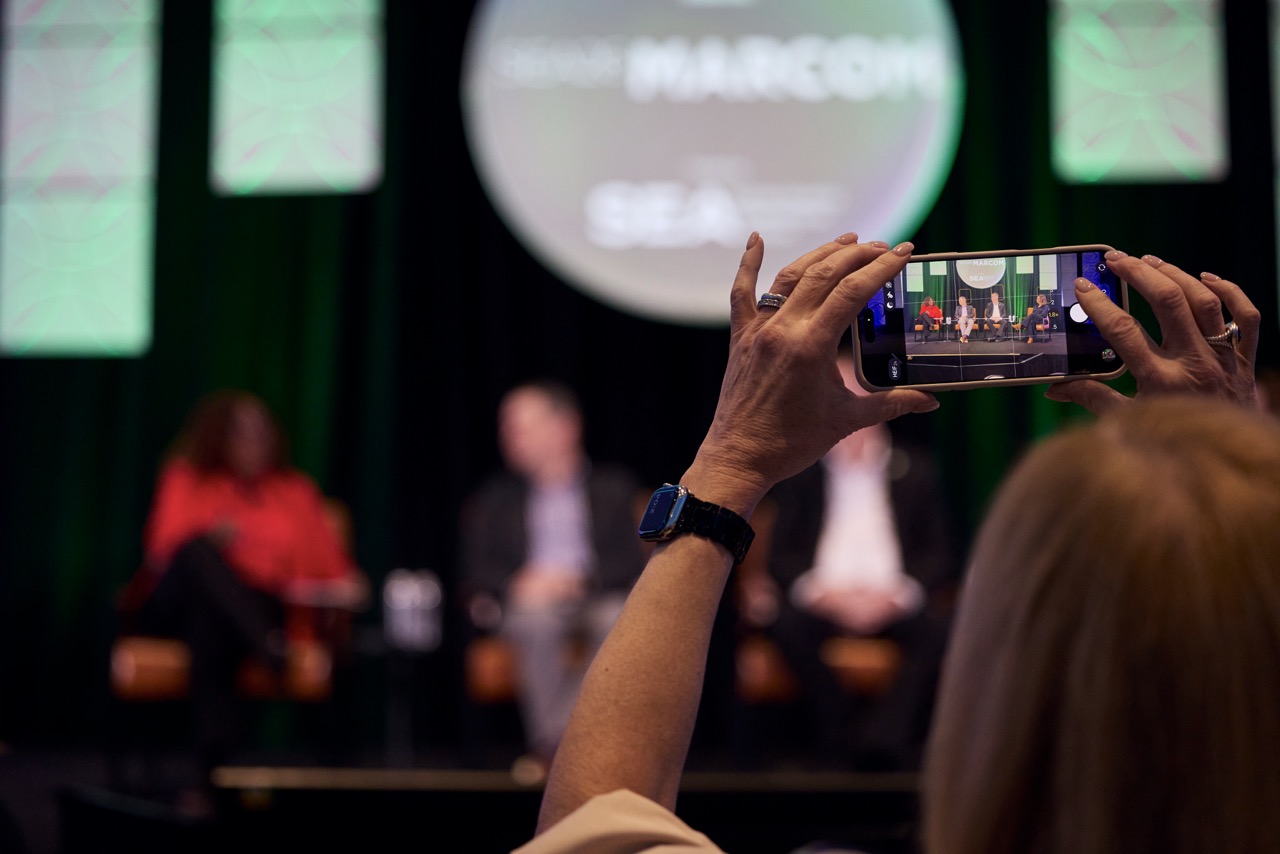
We just spent four days in Seattle with aviation colleagues, clients, and friends as the Diamond sponsor of the ACI-NA 2026 Marketing and Communications Conference. Thank you to ACI-NA and to our host, Seattle-Tacoma International Airport.
Rather than recap every session, here are the seven ideas we brought home and how we'd put them to work.
How to Think More Like an Airline
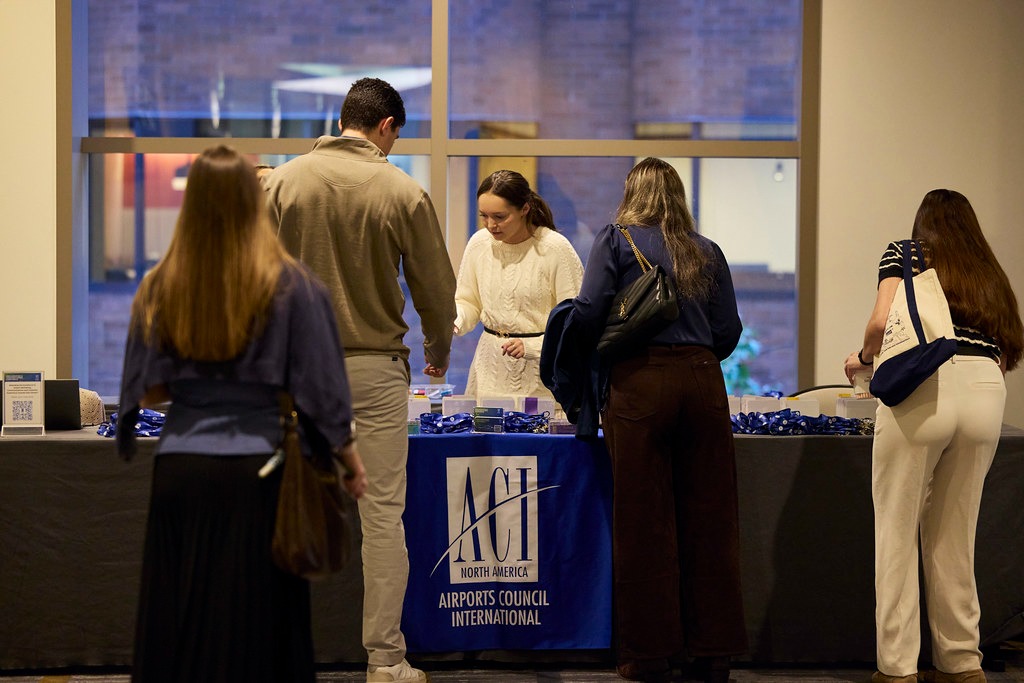
Hearing the airline perspective from Ben Brookman at Alaska Airlines was a highlight. Airlines and local business partners are major stakeholders in an airport's successful acquisition and retention of nonstop routes, and they deserve more than just executive communications.
The question is how airports can tie their priority initiatives, which often create more costly arrangements for airlines, back to the number one factor for every airport: providing a better experience for the flying public.
One answer is building stronger relationships with local business partners, both financially and through leveraged collaboration. These partnerships can often make or break the business case for a competitive nonstop to land with your airport or a peer (both in and out of market).
Airlines are also focused on cost per enplanement (CPE), and we don’t hear many marketing and communications teams talking about this outside of master planning sessions. When you discuss capital projects with airline partners, make CPE impact a core part of the conversation. If it’s not in your favor to discuss, try to position the improvements in ways that are meaningful to airline partners.
Lead with Radical Curiosity
Leadership and internal communications came up again and again. Keynote speaker Eric M. Bailey made the case (and presented the science in real time) that perspective shapes every human interaction: how a message is perceived often matters more than what was actually said.
For communicators, that means working harder to understand our audiences and their perspectives, and making fewer assumptions. Bailey calls this radical curiosity: ask more questions, and listen more than you speak. Applied to high-stakes communication, it can feel uncomfortable at first, but it delivers better, more meaningful results up and down the ladder, as well as with external partners.
Use AI as a Force Multiplier, Not a Replacement
AI is the buzzword of the moment, and it's attracting enormous investment in every arena. Beyond the hype, we see real promise in using AI as a force multiplier for airport teams and a way to bring a more personal touch to technology, not a replacement for the people who make airports work.
Cincinnati/Northern Kentucky International Airport and Hello Airport demonstrated what this can look like in the wild. CVG's AI assistant answers passenger questions in real time, in places like baggage claim and the concourse, and the airport turned existing pillars into QR code stands that connect travelers to a live answer engine. It's an important first step in bridging the physical and digital airport experience, while providing an elevated 24/7 customer service experience.
Make Your Airport the Answer in AI Search
Speaking of AI, the working group sessions were full of questions about generative search and answer engine optimization (AEO). More travelers now get answers straight from Google's AI Overviews and tools like ChatGPT instead of scrolling through search results. If your airport's information isn't clear and current, AI will pull it from somewhere else, like a review site, an outdated listing or a competitor.
Airports start with an advantage: they're the authority on their own parking prices, concessions hours and nonstop routes. To build on it, audit your site, gather the answers travelers ask about most, research which prompts you're cited for (and which you aren't), and turn the gaps into a content calendar. Write in a simple question-and-answer format, add structured data, and keep information current, because an outdated parking rate can do more harm than no answer at all.
We cover this in more depth in our beginner's guide to AEO for airports.
Fill the Funnel Before You Convert
There was plenty of talk about digital marketing fundamentals, including strong examples of layered, strategic media planning from the team at San Francisco International Airport. Our biggest takeaway: it's easier than ever to punch above your weight with platforms like streaming TV, and targeted digital is the keystone of measurable, results-focused marketing.
But you have to fill the funnel before you can convert. That's where a modern approach to traditional channels comes in. Think outdoor placements like kiosks at lifestyle centers and walkable shopping districts, or commercials on local news stations that run only during the dayparts you choose, bought through streaming inventory aggregators. Several of these options let airports run campaigns at the level of a Fortune 500 brand, with minimums as low as $1,000.
Measure Air Service Marketing by What Airlines Value
Conversion-focused booking services came up too, but for air service development (ASD) marketing, we don't fixate on conversions. The volume is usually too low, and the results, while clear, don't move the overall needle. We see these airport booking services as a complement to traditional ASD spending, not a replacement.
Why? ASD success is measured in load factors, community sentiment and whatever the airline partner considers a win. Airlines also earn a large share of their profit beyond the seat itself, through loyalty programs and co-branded credit cards, so the broader picture is often a better measure than a single conversion count. And measurable or not, good creative and a sound strategy will always beat one data point.
Don't Overlook Parking and Concessions
If you have an online parking booking system, treat it as a marketing tool, not just a technology platform. Reservations let airports compete earlier in trip planning, when travelers are choosing between parking, ride-share, an airport hotel or a ride from family. Each booking account also turns an anonymous vehicle into a known customer you can stay in touch with after the trip. Measure success by repeat use, not only reservation counts: the first booking takes marketing, the second shows trust, and the third becomes a habit.
For concessions, the opportunity is finding new ways to interrupt the passenger journey. Concessions can be difficult to market, track and build momentum for, but our experience and research tell us that changing passenger behavior on site through experiences, activations, pop-ups and other real-life (or AI-augmented) engagement does more to increase revenue per passenger.
Congratulations to This Year's Award Winners
Congratulations to every winner of the 2026 Excellence in Airport Marketing, Communications and Customer Experience Awards. San Diego International Airport took home the Peggy G. Hereford Award for Overall Excellence, and our host, Seattle-Tacoma International Airport, won Customer Experience Programs (Large Airport) and Best in Airport Partnerships.
In Marketing Programs, the winners were Charlotte Douglas International Airport, Hollywood Burbank Airport and Rochester International Airport. In Public Relations Programs, they were Philadelphia International Airport, Edmonton International Airport and J.A. Douglas McCurdy Sydney Airport. See the full list of winners from ACI-NA.
Ready to put this into practice?
Let's Talk